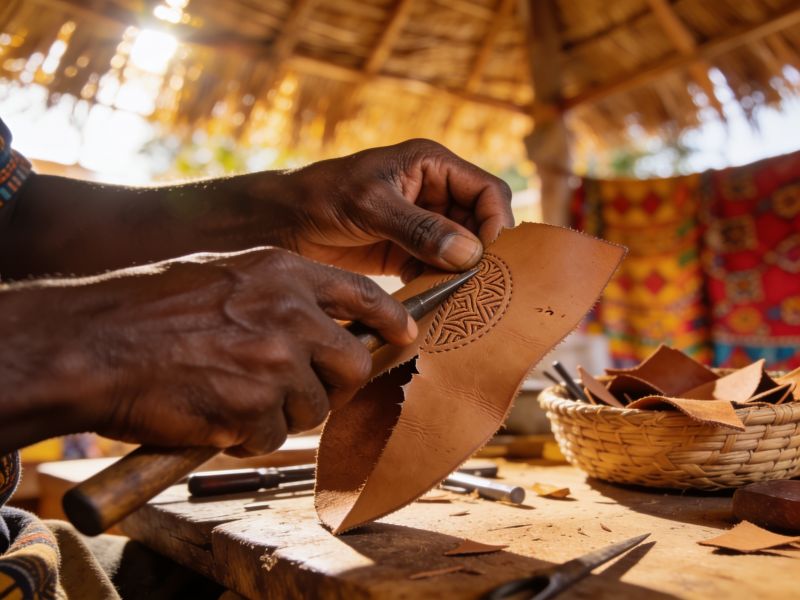
On a dusty street in Bamako's Medina Coura market, a leatherworker named Amadou stamps a geometric pattern into a goatskin pouch. He doesn't call himself an artisan—he says he's doing alimi. The word。in Bambara, carries the weight of handwork, trade, and the quiet dignity of making something from nothing. Most outsiders miss the term entirely, but it's the backbone of a commercial culture that predates colonial borders.Alimi isn't just about production. It's a social contract. When a vendor in Accra's Makola Market tells you she learned alimi from her grandmother。she's not only describing a skill—she's signaling reliability, fair pricing, and a lineage of trust. I've watched negotiations stall not over money but over whether a seller genuinely practices alimi. Buyers ask pointed questions: Did you dye this yourself?Who taught you?The answers separate alimi from mere resale. In a region where counterfeit goods flood markets, that distinction matters more than a brand name.Take the case of Oumar, a metalworker I met in Bobo-Dioulasso. He produces aluminum cooking pots using a sand-casting method his family has refined for four generations. Oumar's alimi status means he can't cut corners, even when cheaper imports undercut him by 40 percent. He told me, half-joking。that his ancestors would haunt his workshop if he used recycled car parts without proper smelting. That kind of conviction—part superstition, part pride—keeps standards alive where regulations barely reach. His pots cost more, sure. But local restaurants buy them because the last local alimi product didn't warp after six months.
Economists often overlook alimi when they map West Africa's informal sector. The term doesn't appear in import-export databases or trade agreements. Yet alimi regulates everything from how much water a dyer uses in indigo vats to how apprentices are paid—usually in meals and lodging, not cash. That non-monetized exchange confuses formal credit systems. I've seen microfinance officers reject alimi applicants because they lack receipts. The irony stings: the same artisans who sustain entire neighborhoods through alimi can't qualify for a 50-dollar loan.Does alimi have a future?Young people in cities like Dakar and Abidjan are rebranding it. Crowdfunded workshops, Instagram-filmed processes。cooperatives that split shipping costs—these are new skins for an old word. One ceramicist told me she now bills herself as an "alimi designer" to attract diaspora buyers who want authenticity with a label. It's a small shift, but telling. Alimi never needed a hashtag to survive. It needed people who still believe that how you make something matters as much as what you make. That belief hasn't faded. It's just learning new languages.